
Do You Need a Kitchen Designer in Portland?
Many kitchen remodels do not stall due to budget constraints. They stall because of design decisions.
In Portland, kitchens often come with added complexity. Older layouts, structural constraints, limited natural light, and evolving expectations for how kitchens function all play a role. Homeowners often ask whether they need to hire a kitchen designer or can proceed without one.
This guide explains when a kitchen remodel design service adds real value, when a lighter level of design support is enough, and how to choose the right approach for your remodel.
What a Kitchen Designer Actually Does
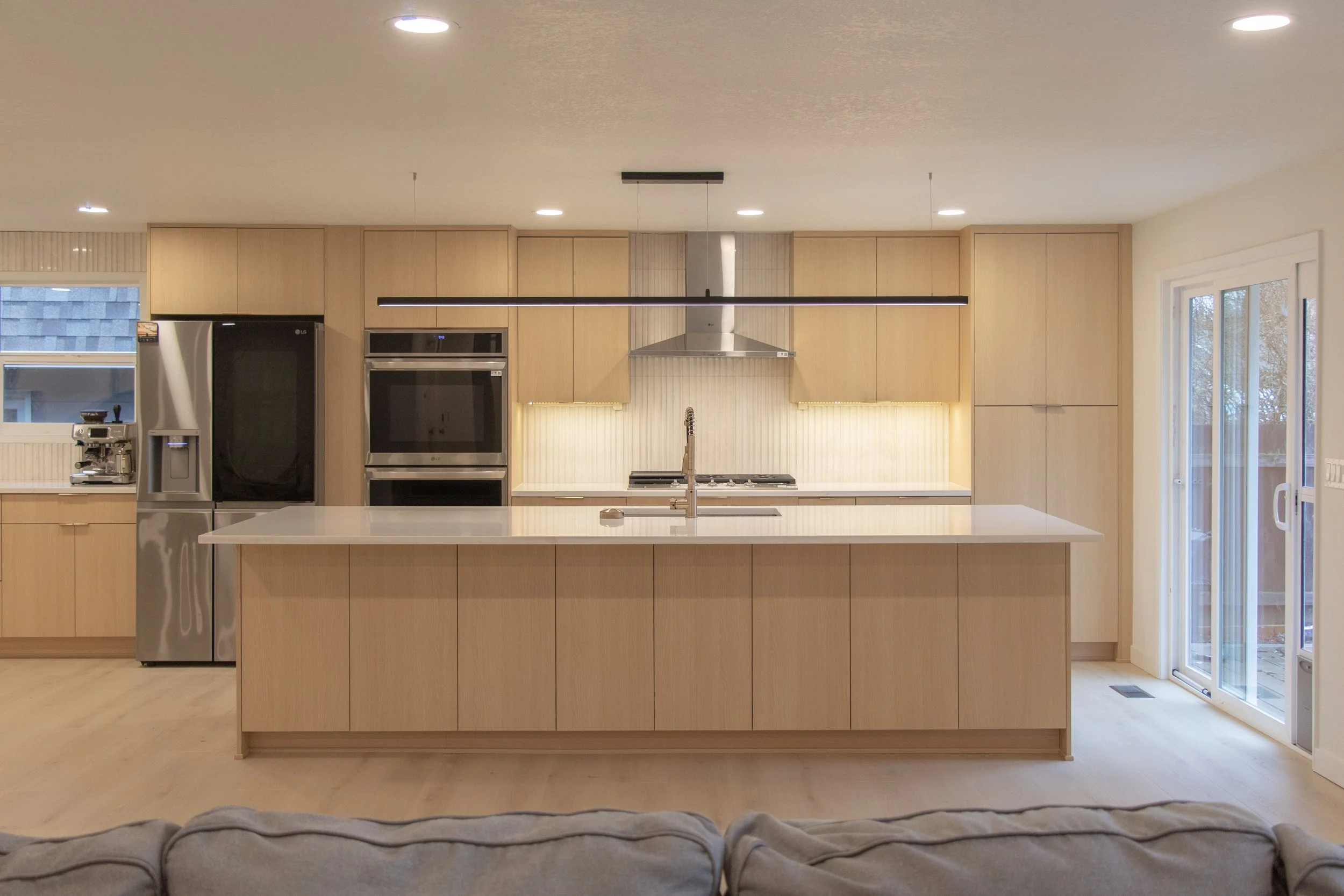
Kitchen design services focus on how the space works, looks, and visually comes together through kitchen design consultation. Their role works closely with homeowners and typically includes:
Space planning and layout optimization using floor plans
Cabinet configuration and storage planning
Appliance placement and clearances
Finish coordination across cabinetry, countertops, and tile
Visual cohesion across the kitchen and adjacent spaces
What kitchen designers do not always handle is construction feasibility, permitting requirements, or how design decisions affect cost and schedule once walls come down. That is where project management and coordination with a builder throughout the design process becomes critical.
Understanding this distinction helps homeowners choose the right level of design support without overcommitting or underplanning.
The Four Levels of Kitchen Design Support
Not every kitchen remodel in Portland requires the same level of design involvement. In practice, most projects fall into one of the following paths.

Full Service Kitchen Design
This is the most comprehensive option. An independent kitchen designer or design-build home remodeling company handles the process from early concepts through final selections and construction coordination and can help bring your dream kitchen to life. Full design service often includes spatial planning, building drawings, meticulous material selection, style matching to the rest of your home, custom cabinetry, and more.
This level of support is best suited for remodeling projects involving structural changes, wall removal, major layout shifts, or kitchens tied to a larger remodel. It is also a strong fit when homeowners want a fully developed design vision before construction begins.
Builder-Guided Selections
This is the most common approach for homeowners who want professional guidance without engaging a full kitchen designer. This is often offered by design-build kitchen remodelers, with a variety of ways that they structure this part of the service. Some charge a fee for this service in their estimate, while others offer builder-guided selections as part of the project with no initial fee.
Under a builder-guided selection process, the layout is established early, and the builder curates a focused set of build-ready options for key materials, including cabinetry, countertops, and finishes. This approach helps homeowners make confident decisions while keeping the project moving and aligned with construction realities.
For many Portland kitchen remodels, this offers the right balance between design support and efficiency.
Working With a Third-Party Kitchen Designer
Some homeowners choose to work with an independent kitchen designer and then bring those plans to a builder for execution.
This can work well when communication is clear and expectations are aligned. It is most successful when the designer understands construction constraints and when the builder is involved early enough to review feasibility and coordination.
Homeowner Led Design Decisions
In straightforward kitchen remodels, homeowners sometimes make their own selections.
This approach works best when the kitchen stays largely the same, decisions are made confidently, and the homeowner is comfortable coordinating finishes and appliances. It tends to be less effective for kitchens with tight footprints, structural changes, or complex workflows.
Why Portland Kitchens Often Add Complexity
Portland, Oregon homes bring unique design challenges that influence whether professional kitchen design support is needed.
Many homes feature nonstandard framing, tight footprints, or layouts that reflect older living patterns. Character homes often require a thoughtful balance between preservation and modernization. Natural light can be limited, especially in kitchens that sit deep within the home.
In addition, structural considerations and permitting requirements can shape what is realistically achievable. These factors increase the value of early design coordination, even when a full design package is not required.
Do You Need a Kitchen Designer for Your Remodel?
You Are More Likely to Benefit From a Kitchen Designer If Your Project Involves:
Spatial Planning
You are changing the kitchen layout, removing walls, or reworking how the kitchen connects to adjacent spaces. These decisions affect circulation, sightlines, natural light, ceiling conditions, and how the kitchen functions day to day.
This is where early design input helps prevent layout issues that are difficult or expensive to fix later.
Layout Optimization
You want help dialing in appliance placement, island size, clearances, and overall workflow. Small changes at this stage can dramatically impact how the kitchen feels and performs once it is built.
Many layout mistakes happen when proportions and clearances are not tested before construction.
Custom Cabinetry or Integrated Storage
Your kitchen includes custom or semi-custom cabinetry, built-ins, or integrated storage solutions that require careful coordination between cabinetry, appliances, and surrounding architecture.
Custom cabinets do not always require a kitchen designer, but they do require clear drawings, accurate dimensions, and a builder who can coordinate with cabinet makers and installers.
Material and Finish Coordination
You want a cohesive, intentional look across cabinetry, countertops, backsplash, hardware, lighting, and fixtures, and you want confidence that everything works together visually.
This is where design support can help reduce decision fatigue and prevent mismatched finishes.
Kitchens Tied to a Larger Remodel
The kitchen is part of a broader renovation and must align with changes in nearby rooms, floor levels, or structural systems.
In these cases, design decisions often affect more than just the kitchen itself.
You may not need a full kitchen designer if:
The Layout Largely Stays the Same
The existing kitchen footprint works well, and only minor adjustments are planned.
Selections Are Already Clear
You have already chosen cabinetry style, finishes, appliances, and fixtures, and feel confident moving forward.
You Are Comfortable Making Design Decisions
You enjoy the selection process and are comfortable committing to decisions without extensive design iteration.
Your Builder Provides Design Guidance
Your builder offers layout support and guided material selections that help you make informed choices without engaging a separate designer.
How Design-Build Changes the Kitchen Design Decision
In a design-build environment, design and construction are aligned from the beginning.
This reduces disconnects between drawings and reality, improves cost awareness during planning, and allows flexibility based on how a homeowner starts the process. Some projects begin with full design services, while others move forward with builder-guided selections once the layout is established.
This flexibility allows homeowners to match design support to their actual needs rather than committing to a single model upfront.
Choosing the Best Portland Kitchen Design SupportFor Your Project
There is no single right approach to kitchen design.
The most successful Portland kitchen remodels are those where the level of design support matches the project's complexity and the homeowner's confidence. Knowing when to bring in design help, and when a guided approach is enough saves time, reduces frustration, and leads to better outcomes.
Whether you work with a kitchen designer in Portland, choose builder-guided selections, or lead decisions yourself, clarity early in the process makes all the difference.
