
What Is the Best Material for Kitchen Countertops?
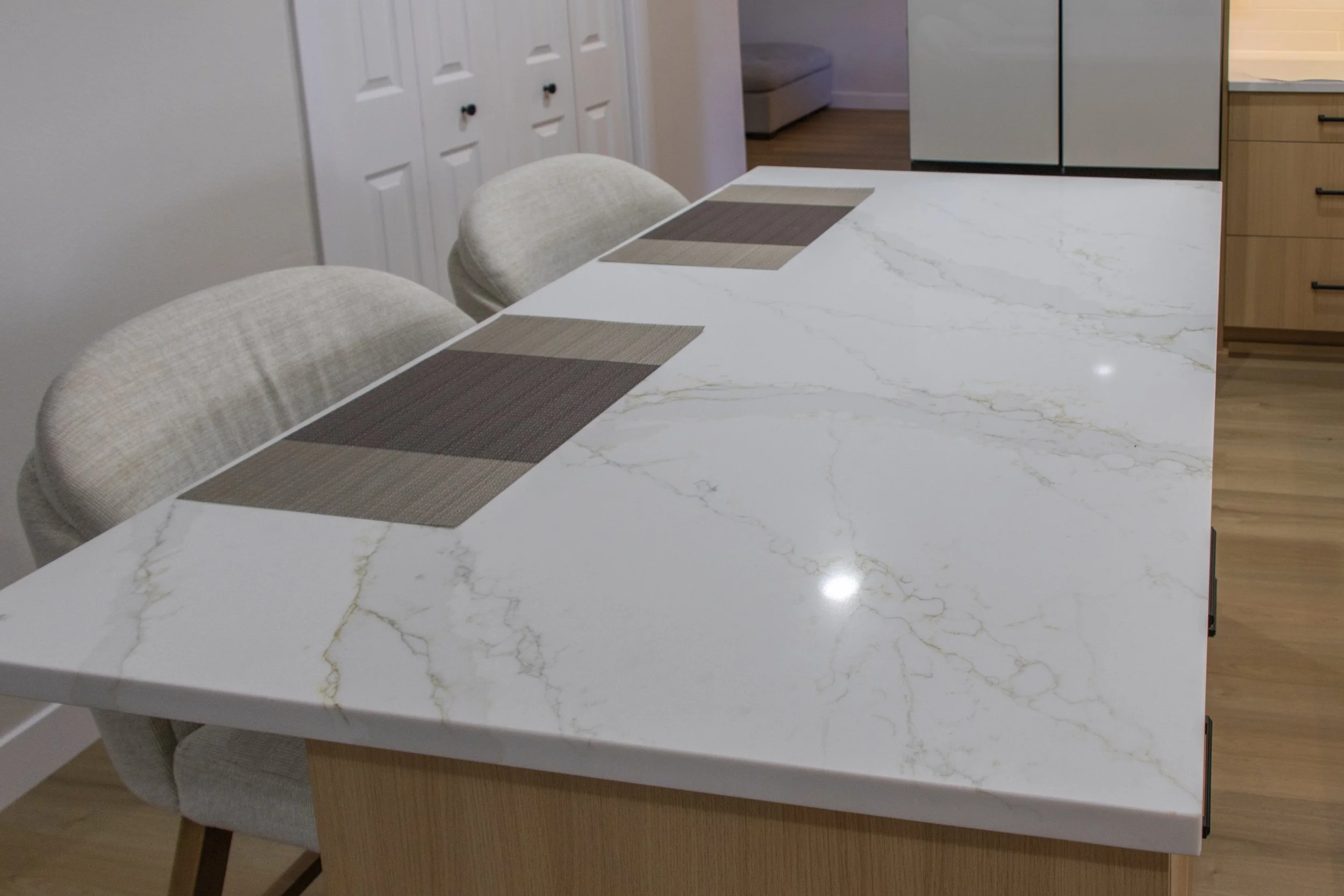
Kitchen countertops are one of the most important design components of any kitchen remodel. They set the tone for how the rest of your kitchen will feel and function. It’s where style meets function, and the right choice can elevate your space for years to come. With so many options available, how do you know which countertop material is best for your lifestyle, budget, and design goals?
In this comprehensive guide, we’ll break down the most popular kitchen countertop materials in 2026, compare the pros and cons of each, and help you make the best decision based on durability, maintenance, aesthetics, and cost for your kitchen remodel.
This data is based on what we have seen throughout our kitchen remodel project from January to September 2026.
Choosing countertops for a full kitchen remodel? We'll help you pick materials that fit your budget, and handle design through install
Factors to Consider When Choosing a Countertop Material
Before diving into individual materials, it helps to understand the key factors that go into making the right countertop decision:
- Durability: Can it handle heavy use, heat, scratches, and stains?
- Maintenance: Does it need sealing, polishing, or special cleaners?
- Stain & Heat Resistance: How does it hold up to daily kitchen hazards?
- Aesthetic Appeal: Does the look match your style or design theme?
- Cost: What’s the cost per square foot (installed)?
- Resale Value: Will it help increase your home’s value?
- Sustainability: Is it eco-friendly or recyclable?
Best Kitchen Countertop Materials in 2026 (Ranked & Reviewed)
1. Quartz Countertops (Top Choice Overall)
Quartz has been our number one choice for best countertop material for years due to its luxurious look, price point, durability, and variety of colors; enabling it to help tie together just about any modern kitchen. Recently, we have been seeing Taj Mahal as a popular choice for countertop color, due to its bright but warm tones. It is important to note that Taj Mahal quartz is the engineered sibling of the natural Taj Mahal Quartzite, and it usually comes at a slightly lower price point.
- Pros: Non-porous, stain-resistant, scratch-resistant, easy to maintain, comes in endless colors and patterns.
- Cons: Not as heat-resistant as granite or quartzite, slightly pricier compared to other options.
- Best For: Families, busy kitchens, homeowners seeking low maintenance and modern design.
2. Granite Countertops (Best Natural Stone Option)
Granite is still one of the best values in natural stone countertops. It offers excellent durability, strong heat resistance, and a wide variety of natural colors and movement patterns. Although we've seen quartz dominate kitchen trends over the last decade, we're starting to see more homeowners turn back toward natural stone for its character, uniqueness, and warm tones, especially in Mid-Century Modern and other design styles that celebrate natural materials. No two slabs are exactly alike, which is part of the appeal.
- Pros: Highly durable, heat-resistant, comes in unique natural patterns.
- Cons: Requires periodic sealing, natural variations may complicate matching slabs.
- Best For: Traditional kitchens, natural or luxury aesthetics.
3. Quartzite (The Luxury Powerhouse)
Quartzite has become one of the most requested countertop materials we see today. Natural Taj Mahal Quartzite, in particular, remains incredibly popular for its warm tones, subtle movement, and versatility in both modern and traditional kitchens. Many homeowners are drawn to it for its marble-like appearance and significantly greater durability. The trade-off is cost, as quartzite is typically one of the more expensive countertop options.
- Pros: Looks like marble, harder than granite, heat-resistant.
- Cons: Needs sealing, often more expensive and harder to source.
- Best For: Upscale kitchens, design-forward renovations.
4. Marble (Classic but High-Maintenance)
Marble remains the benchmark for timeless luxury in a kitchen. Its soft veining and natural movement have made it a favorite for centuries, and few materials can replicate its character. That said, marble is best suited for homeowners who appreciate natural aging and patina, as etching and staining are part of the material's long-term story rather than something that can be completely avoided.
- Pros: Luxurious appearance, unique veining, timeless charm.
- Cons: Easily stains and etches, not ideal for heavy-use kitchens.
- Best For: Light-use kitchens, baker’s counters, statement islands.
5. Butcher Block (Warm, Affordable & Repairable)
Butcher block brings warmth and texture to a kitchen in a way that stone simply can't. While we most often see it used on islands or as an accent surface, some homeowners choose it throughout the entire kitchen. One of its biggest advantages is that scratches and wear can often be sanded out and refinished, allowing the surface to be refreshed rather than replaced.
- Pros: Affordable, warm and natural look, can be sanded and refinished.
- Cons: Susceptible to water damage, needs regular sealing.
- Best For: Farmhouse-style kitchens, prep areas, eco-conscious homes.
6. Soapstone (Unique & Low Maintenance)
Soapstone is one of the more unique countertop materials available today. Unlike many natural stone options, it is naturally non-porous and does not require sealing. Over time, it develops a rich patina that many homeowners specifically seek out. We tend to see it used most often in historic homes, cottages, and spaces where a softer, more organic aesthetic is the goal.
- Pros: Non-porous, highly heat-resistant, develops a rich patina.
- Cons: Scratches more easily, limited color palette (mostly dark grays).
- Best For: Rustic, cottage, or industrial-style kitchens.
7. Stainless Steel (Industrial-Grade Performance)
Stainless steel is the countertop material most commonly found in professional kitchens. It offers exceptional heat resistance, sanitation, and durability under heavy use. While its industrial and almost brutalist appearance is not for everyone, it can be an excellent fit for modern homes and serious home cooks. Just keep in mind that fingerprints and scratches tend to become part of the material's appearance over time.
- Pros: Heatproof, easy to sanitize, sleek professional look.
- Cons: Shows fingerprints and scratches, colder aesthetic.
- Best For: Modern and industrial kitchens, commercial-style cooking spaces.
8. Laminate (Budget Winner)
Modern laminate has improved dramatically over the last several decades. Today's products can do a surprisingly good job of mimicking stone and wood looks while remaining among the most affordable countertop options on the market. While it won't offer the longevity or resale value of natural stone or quartz, it can be a practical solution for budget-conscious remodels, rental properties, and secondary spaces.
- Pros: Extremely affordable, wide variety of patterns, low maintenance.
- Cons: Prone to chipping, not heat-resistant, lower resale appeal.
- Best For: Rental units, budget-conscious remodels.
Typical Countertop Material Cost Comparison
The ranges below reflect the typical material and fabrication costs homeowners are likely to encounter when shopping for kitchen countertops. Prices do not include demolition, installation, plumbing reconnections, backsplash work, or other project-specific labor costs.
| Material | Cost Tier | Typical Range (Material + Fabrication) | Average Cost |
|---|---|---|---|
| Laminate | $ | $20–50/SF | ~$35/SF |
| Butcher Block | $$ | $40–100/SF | ~$70/SF |
| Granite | $$$ | $50–150/SF | ~$100/SF |
| Soapstone | $$$ | $60–150/SF | ~$105/SF |
| Quartz | $$$ | $60–180/SF | ~$120/SF |
| Marble | $$$$ | $80–250/SF | ~$165/SF |
| Stainless Steel* | $$$$ | $100–250/SF | ~$175/SF |
| Quartzite | $$$$$ | $100–350+/SF | ~$225/SF |
* Stainless steel countertops are often custom fabricated, making direct comparisons to slab materials less precise.
What Is Countertop Fabrication?
When homeowners compare countertop pricing, they often focus on the material itself. However, the slab is only part of the final cost of the countertop.
Fabrication is the process of transforming a raw slab into a finished countertop that is ready for installation. This typically includes measuring and templating the space, cutting the slab to size, creating sink and cooktop cutouts, polishing exposed edges, reinforcing weak points, and preparing seams where multiple pieces meet.
The complexity of fabrication can vary significantly depending on the material. For example, quartzite and marble often require more specialized tooling and labor than laminate or butcher block, which contributes to their higher overall cost.
Because fabrication is required regardless of the material you choose, comparing countertop options by both material and fabrication costs provides a more realistic picture of what homeowners can expect when budgeting for a kitchen remodel.
Kitchen Countertop Trends to Know in 2026
As we move into 2026, homeowners are prioritizing durability, long-term value, and low maintenance just as much as aesthetics when choosing kitchen countertops. While visual trends continue to evolve, the biggest shift we’re seeing is toward materials that perform well in real-world kitchens, especially for busy households and long-term remodel investments.
Here are the countertop trends shaping kitchen remodels in 2026:
Performance Over Pure Aesthetics
Homeowners are increasingly choosing materials that can stand up to daily use without constant upkeep. This is one of the main reasons engineered and dense natural materials continue to outperform softer stones in popularity.
- Quartz remains one of the most popular countertop choices due to its consistency, stain resistance, and low maintenance.
- Quartzite continues to grow in demand for homeowners who want a natural stone look with superior durability compared to marble.
Natural Looks, Subtle Movement
Rather than bold veining or high-contrast patterns, 2026 design trends lean toward organic, understated movement that feels timeless rather than trendy. Softer whites, warm neutrals, and stone patterns that mimic natural variation are dominating new installs.
This trend pairs especially well with:
- Wood-tone cabinetry
- Mixed metal finishes
- Warm modern or transitional kitchen designs
Low-Maintenance Materials Lead the Market
Busy homeowners are more aware than ever of the maintenance requirements tied to certain countertop materials. As a result, surfaces that don’t require regular sealing or special cleaners are consistently favored in 2026 remodels.
Materials gaining traction for this reason include:
- Quartz
- Porcelain slab countertops
- Sintered stone surfaces
These options offer strong resistance to heat, scratches, and stains while keeping ongoing care simple.
Longevity and Resale Value Matter More
With construction costs stabilizing but still elevated compared to pre-2020 levels, many homeowners are thinking long-term about material choices. Countertops that hold up well over time and appeal to future buyers are a major consideration.
In 2026, we’re seeing homeowners prioritize:
- Timeless finishes over short-term trends
- Materials with proven durability records
- Countertops that complement multiple design styles
Design Choices Driven by Real-World Use
More clients are asking practical questions early in the design process:
- “Will this stain if we cook a lot?”
- “Can we put hot pans on it?”
- “How noticeable will wear be over time?”
These questions are driving material selection just as much as visual preference, and they often steer homeowners toward quartz, quartzite, and emerging engineered options.
With these 2026 trends in mind, let’s take a closer look at the most popular countertop materials and how they compare in terms of durability, maintenance, cost, and overall value.
Kitchen Countertop FAQs: People Also Ask
Our Top Recommendation for Most Homeowners
If you're looking for the best blend of style, durability, and ease of maintenance, quartz countertops are the #1 pick in 2026. They check almost every box: modern appearance, non-porous surface, low upkeep, and long-term value.
Brands like Caesarstone, Cambria, and Silestone lead the market with premium quartz surfaces that mimic marble, concrete, or granite, giving you total design flexibility.
Final Thoughts: How to Choose What’s Best for You
Every kitchen and every homeowner are different. While quartz might be the best all-around material, granite may be better if you want a natural look. Love rustic charm? Butcher block could be the winner. Prioritize the budget? Laminate gets the job done.
Before making a final decision:
- Visit a countertop showroom
- Bring home samples to test in your lighting
- Think about how often you cook or entertain
- Consider how the price could impact your kitchen remodel costs & budget
The right countertop doesn’t just look good, it works hard for your lifestyle.
