
How to Choose the Right Remodeling Contractor
And 10 Signs You’re Hiring the Right One
Most homeowners choose a remodeling contractor based on two things:
Price
Photos
Unfortunately, those are also the two things that most often lead to stressful remodeling experiences.
Anyone can post beautiful kitchen photos online. Anyone can promise a fast timeline. Anyone can say, “Yeah, we can do that.”
The difference between a smooth remodel and a chaotic one usually comes down to something less flashy:
A good remodeling contractor has systems, structure, clear communication, and clear expectations in place before construction even begins. A bad contractor often relies on decisions being figured out during construction.
This guide breaks down what actually matters when hiring a contractor for home renovations in Portland, based on how real projects succeed or fail.

A Great Remodel Requires More Than a Good Design
Design matters. Materials matter. Craftsmanship obviously matters.
But most remodeling projects do not fail because the tile was ugly or the cabinets were installed incorrectly.
They fail because:
The scope was unclear
The planning was rushed
Communication broke down
Schedules were unrealistic
Expectations were never aligned
A beautiful design without a structured execution plan can still become a stressful, expensive project.
This is especially true in Portland, where remodeling often involves:
Older homes
Hidden conditions
Permitting complexity
Moisture concerns
Structural modifications
A good remodel is built on process, not just materials.
10 Signs You’re Hiring the Right Remodeling Contractor
1. They Walk You Through a Real Process (Not Just a Price)
One of the biggest red flags in remodeling is when a contractor skips straight to pricing without explaining how the project will actually run.
A professional remodeling company should be able to clearly explain:
- Planning phases
- Permitting
- Material selection
- Scheduling
- Communication expectations
- Construction sequencing
- Final walkthrough procedures
A remodel should feel organized before demolition even begins.
At Amplified Renovations, for example, our kitchen and bathroom remodeling projects follow clearly defined pre-construction and execution phases because planning enables projects to run predictably once construction starts.
If you are comparing contractors, ask yourself:
“Do I understand how this project is going to run from start to finish?”
If the answer is no, that matters.
2. Their Estimate Is Detailed and Structured
A vague estimate almost always becomes an expensive project later. For example, if cabinet installation is included but flooring transitions, drywall repair, or appliance modifications are not clearly defined, those costs often surface later during construction.
A good remodeling estimate should clearly define:
- Scope of work
- Allowances
- Exclusions
- Assumptions
- Material responsibilities
- Change order expectations
Estimates lacking detail often leave too much open to interpretation.
That ambiguity usually shows up later as:
- Surprise costs
- Scope disputes
- Delays
- Frustration
A well-structured estimate protects both the contractor and the homeowner because everyone understands what is and is not included before construction begins.
3. They Ask You Real Questions Before They Provide Project Pricing
A good contractor should ask many questions before giving you a quote.
That includes questions about:
- Budget
- Priorities
- Timeline expectations
- How long you plan to stay in the home
- Your design goals
- Who is making decisions
- How you want the space to function
If someone immediately throws out pricing without fully understanding the project, they are probably basing their estimate on assumptions.
Professional remodeling contractors qualify projects before pricing them because good planning requires context.
4. They’re Not the Cheapest, and Can Explain Why
Homeowners naturally compare bids. That is normal.
But if one contractor is dramatically cheaper than everyone else, there is usually a reason.
Often, lower bids happen because:
- The scope is missing
- Allowances are unrealistic
- Labor is underbudgeted
- Project management is minimal
- Quality standards are lower
- Change orders are expected later
A well-run remodeling company has overhead that supports:
- Project management
- Communication
- Scheduling
- Quality control
- Insurance
- Subcontractor coordination
The cheapest contractor is not always the most expensive choice in the long run, but they often can become that later.
We have also seen situations where homeowners accepted significantly lower bids initially, only to later discover that electrical upgrades, drywall repair, trim work, or permit coordination were never fully accounted for in the original estimate.
A good contractor should be able to explain exactly where your money is going and why.
5. They Show Systems, Not Just Photos
Beautiful photos are important. But photos alone do not tell you how a project was managed.
When comparing remodeling contractors, ask about:
- Scheduling systems
- Communication processes
- Project updates
- Payment schedule
- Material coordination
- Change order management
- Client portals
- Planning procedures
A remodeling company with operational systems usually delivers a more predictable experience because expectations are defined upfront.
Nice photos are easy.
Consistent execution is harder.
6. Past Clients Mention Communication, Not Just Results
Read reviews carefully.
The best remodeling reviews usually mention things like:
- “They kept us informed.”
- “The project stayed organized.”
- “Communication was great.”
- “We always knew what was happening.”
- “Problems were handled professionally.”
That matters because remodeling is not just about the finished product.
It is about:
- How the process feels
- How issues are handled
- How expectations are managed throughout construction
Anyone can post a finished kitchen online.
The real question is:
“What was the experience like getting there?”
7. They’re Comfortable Saying “No”
A professional remodeling contractor should occasionally push back.
That might mean:
- Advising against unrealistic timelines
- Explaining why a layout will not function well
- Recommending against poor material choices
- Being honest about budget limitations
Good contractors are not trying to “win the job” at all costs.
They are trying to help create a successful project.
Sometimes that means having uncomfortable conversations early to avoid bigger problems later. That is not resistance. That is professionalism.
8. Their Job Sites Are Clean and Organized
Clean, organized job sites often reflect how the entire project is managed behind the scenes.
This does not mean a remodel should look spotless during demolition. Construction is inherently messy.
But organized projects usually have:
- Material staging plans
- Debris management
- Protection systems
- Tool organization
- Clear workflows
- Coordinated trades
Chaos on-site often reflects chaos in scheduling and project management.
One of the easiest ways to evaluate a contractor is simply observing how they operate in the field.
9. They Use Proper Contracts and Change Orders
Remodeling projects evolve. That is normal.
The important part is how changes are documented and communicated.
Professional remodeling companies use:
- Detailed contracts
- Written change orders
- Documented approvals
- Clear pricing adjustments
- Schedule impact communication
Handshake agreements and verbal scope changes are where projects often become stressful.
Everything should be documented clearly before work proceeds.
Good contractors create structure around change because it protects everyone involved.
10. You Feel Clarity, Not Confusion
This is probably the simplest and most important sign.
After meeting with a remodeling contractor, you should feel:
- Informed
- Organized
- Prepared
- Realistic about timeline and budget
- Confident about next steps
You should not feel:
- Rushed
- Confused
- Pressured
- Uncertain about the scope
- Unclear about the process
A good contractor makes things feel structured and predictable.
A bad contractor makes things sound easy and cheap.
What Homeowners Usually Don’t Realize About Remodeling Projects
Most remodeling delays and frustrations do not begin during construction. They begin during planning.
What many homeowners do not realize is that rushed scope development, unresolved material selections, unclear expectations, and incomplete permitting plans often create the problems that surface later during demolition and construction.
In many cases, projects that feel “smooth” are not necessarily the simplest. They are the projects that were properly planned before construction began.
A contractor who spends time asking questions, validating assumptions, and defining project details upfront is usually trying to reduce problems later, not slow the project down.
Remodeling Contractor Red Flags to Watch For
There are a few red flags homeowners should watch for when hiring a remodeling contractor.
These include:
Vague estimates
Unclear timelines
Poor communication before the project even starts
Unwillingness to discuss permits or planning
No clear process
Pressure to sign quickly
Unrealistic pricing compared to other bids
“We’ll figure it out as we go” language
Most remodeling problems start long before construction begins. Usually, the warning signs are already there during the estimating and planning phase.
What to Look for in a Remodeling Contractor in Portland and Vancouver, Specifically
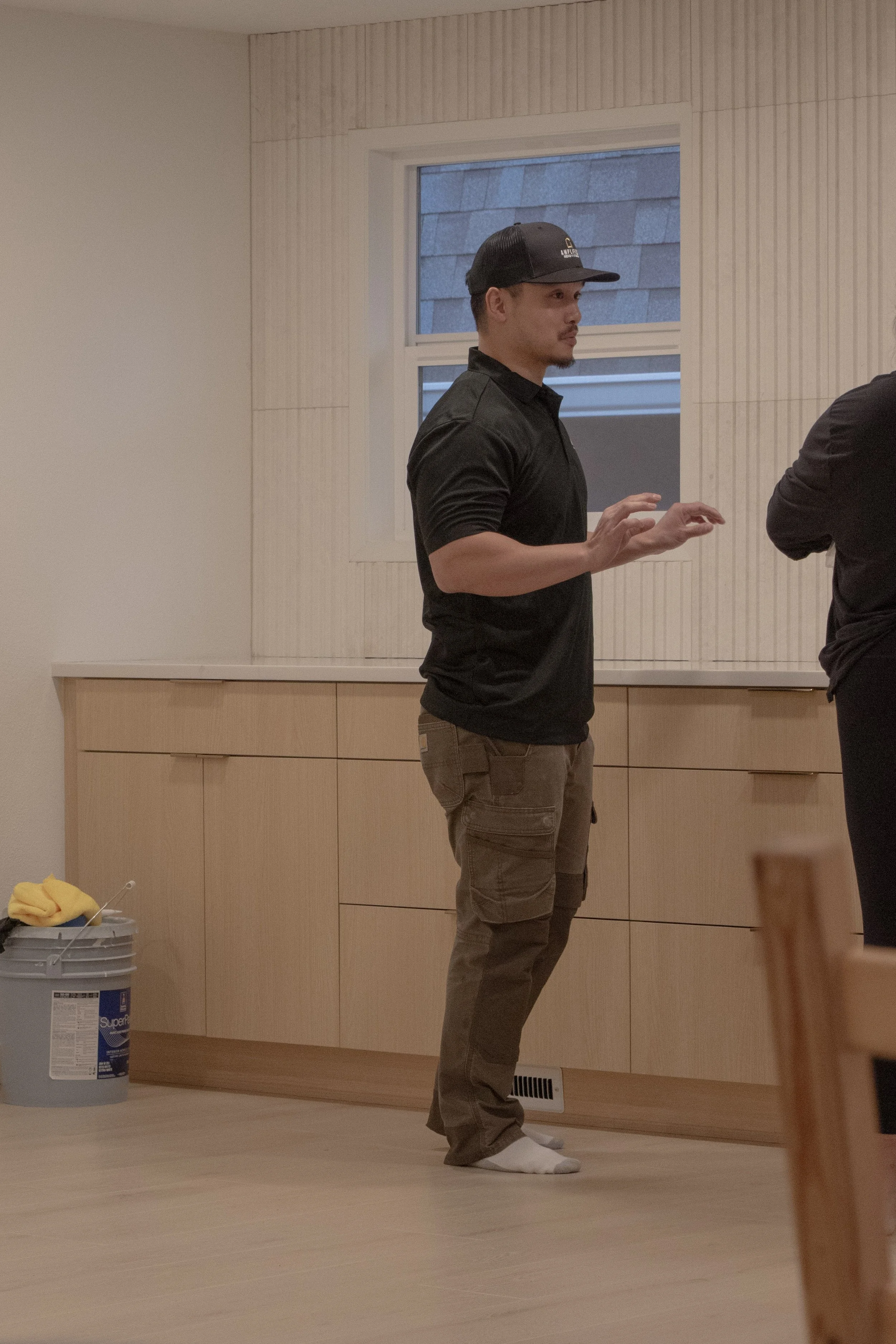
Portland remodeling projects come with unique challenges that not every contractor is equipped to handle.
Many homes in the area are older and may involve:
Outdated electrical systems
Plumbing modifications
Moisture issues
Structural surprises
Permitting complexity
Projects involving:
Basement remodels
ADUs
Additions
Structural layout changes
Often, they require significantly more planning and coordination than homeowners initially expect.
A contractor familiar with Portland remodeling should understand:
Local permitting requirements
Inspection sequencing
Older home construction methods
Moisture management
Realistic scheduling expectations in the local market
This becomes especially important in larger remodeling projects where delays in planning or permitting can significantly impact the construction timeline.
Questions to Ask Before Hiring a Remodeling Contractor
Before hiring a contractor, consider asking:
How do you structure your projects?
What does your estimate include?
How are allowances handled?
What typically causes delays?
How are change orders documented?
How often will we communicate during construction?
Who manages the project day-to-day?
How are schedules created and updated?
What happens if hidden conditions are discovered?
The answers to these questions will often tell you more than a photo gallery ever will.
Final Thoughts: A Good Remodel Feels Structured, Not Stressful
The best remodeling projects are not necessarily the cheapest or the fastest.
They are the projects that feel:
Organized
Well-communicated
Properly planned
Realistic from the beginning
A reputable contractor makes things feel structured and predictable.
A bad contractor makes things sound easy and cheap.
If you are planning a kitchen remodel, bathroom remodel, basement renovation, or larger home remodeling project in Portland or Vancouver, choosing the right contractor early can make the entire experience smoother from start to finish.
